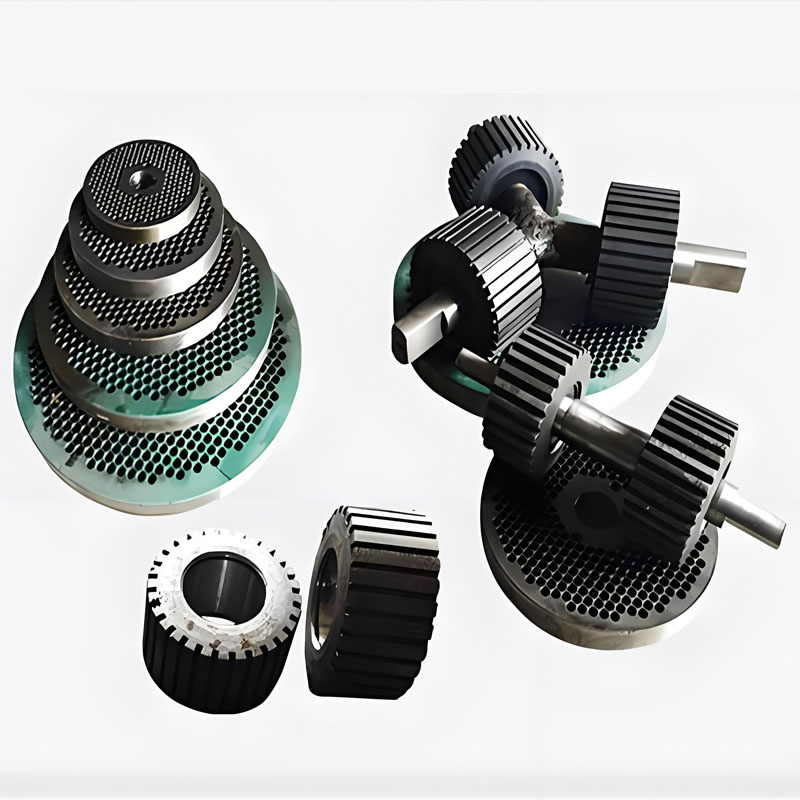
Pellet Machine Roller
Core pressure-bearing components: They collaborate with the mold to form the extrusion system, withstand the main working pressure, and serve as the foundation for ensuring that the material is forced through the die hole and successfully molded.
Excellent wear resistance: In sync with the mold, it utilizes high-quality alloy steel and carburizing and quenching processes to ensure extremely high surface hardness and wear resistance, thereby extending its service life.
Precise and balanced force application: Precise manufacturing ensures uniform clearance with the mold, avoiding eccentric wear and ensuring stable pressing force, thereby producing particles of uniform quality.
Self-rotating cleaning design: It relies on friction with the material to achieve self-rotation. This mode of motion helps prevent material adhesion, possesses a certain self-cleaning effect, and maintains stable operation.
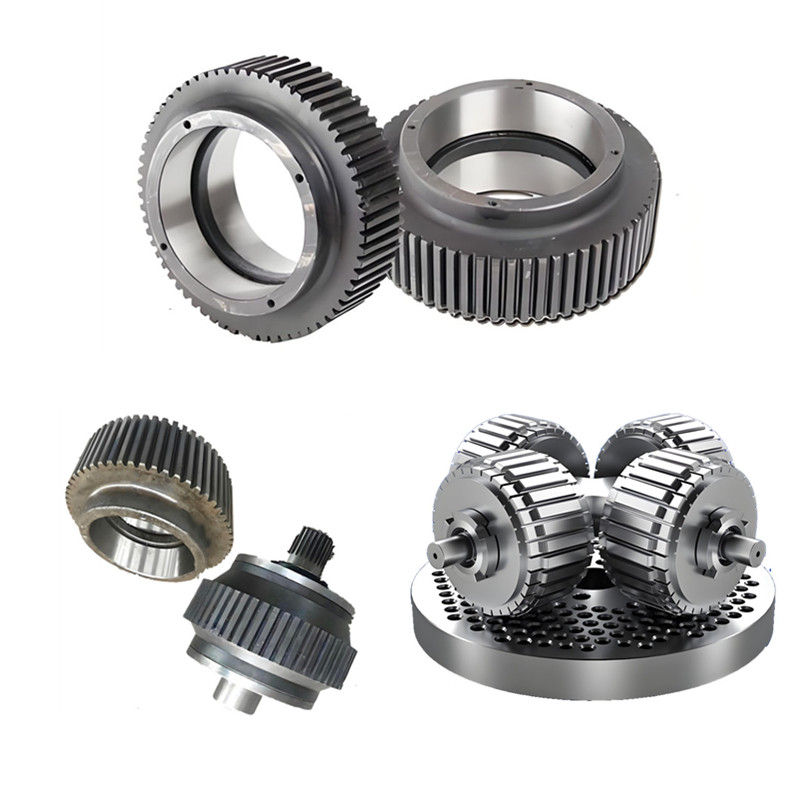
The Pellet Machine Roller is a component in the pellet press that directly cooperates with the mold, applying significant radial pressure to the raw material. Its function is to use immense pressure to force the material on the surface of the mold into the mold holes, densifying and shaping it. The precision of the fit between the press roller and the mold, as well as the material and durability of both, directly determine the production efficiency, energy consumption, and product quality of the pellet press.
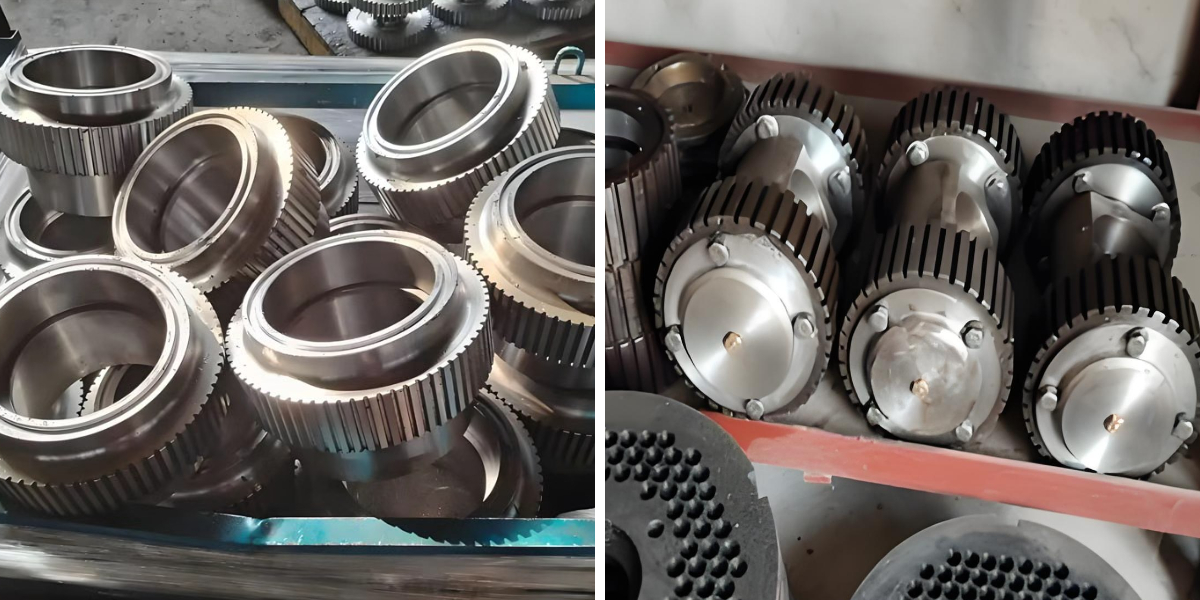 Core characteristics
1. Extremely high wear resistance
The pressure roller and mold are the two components that wear out the fastest in a pellet mill. Their surfaces are usually made of high-quality alloy steel of the same grade as the mold, and undergo heat treatment processes such as carburizing and quenching to achieve extremely high surface hardness (typically above HRC58) to resist severe wear from the material.
2. Scientific installation and transmission design
In the ring mold granulator, the pressure roller is mounted on a fixed eccentric shaft through bearings, and its rotation is achieved by relying on the friction between it and the rotating ring mold.
In a flat-die pelletizer, the pressure roller usually revolves around the main shaft and simultaneously rotates due to the friction with the flat die.
This "pure rolling" design can effectively reduce frictional power consumption and prevent scratching the mold.
3. Precise gap adjustment
The gap between the pressure roller and the mold is one of the most critical parameters of the granulator.
Too small gap: It can lead to direct contact between the pressure roller and the mold, exacerbating wear, generating metal debris, and contaminating the material.
Excessively large gap: It can cause the material to slip, preventing the establishment of sufficient pressure, resulting in decreased production or even failure to discharge material.
Usually, it is necessary to control the gap within the range of 0.1-0.5mm through adjusting the mechanism.
4. Effective anti-slip design
To increase the friction between the material and prevent "material layer slipping", the surface of the pressure roller is designed with grooves or honeycomb-like patterns. These patterns can "bite into" the material, ensuring effective transmission across the pressing surface.
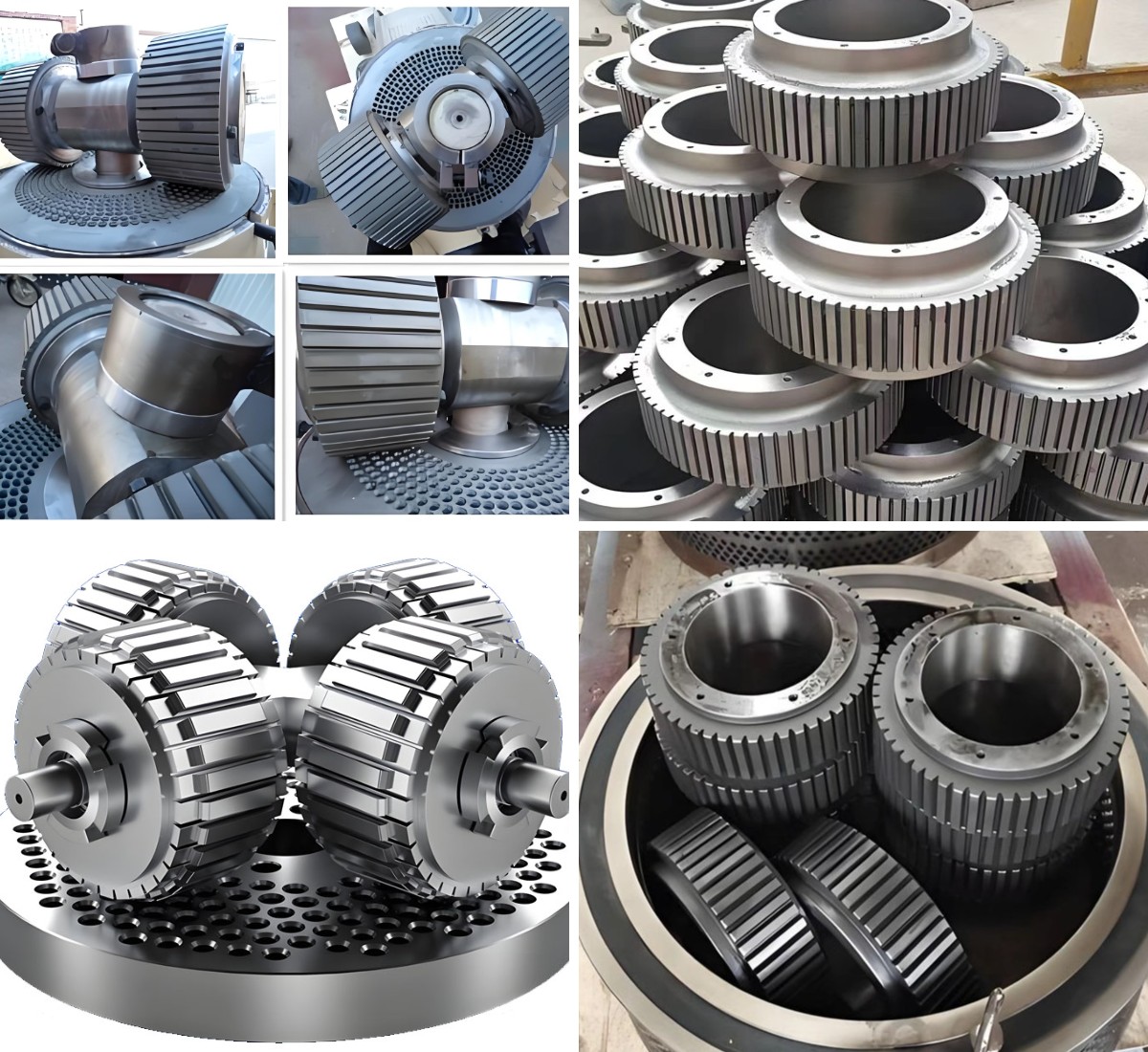 The collaborative relationship between the pressure roller and the mold
Synchronous wear: Under ideal conditions, the pressure roller and the mold should wear synchronously to maintain the optimal working clearance. If one wears too quickly, the performance and lifespan of the other will also be affected.
Hardness matching: Typically, manufacturers design the hardness of the pressure roller to be slightly lower than that of the mold (approximately 1-2 HRC lower), with the aim of prioritizing the protection of the more expensive and complex-to-replace mold in case of anomalies.
Paired replacement: For optimal performance, it is recommended to replace the pressure roller and mold in pairs when one of them reaches the limit of wear.