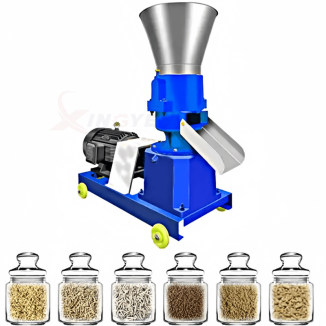
Flat Die Wood Pellet Mill
1. The vertical structure is compact, with extremely high investment and maintenance costs
2. Excellent adaptability to both wood and agricultural waste
3. The vertical compression path is short and consumes less energy
4. The structure is intuitive, easy to maintain and labor-saving
5. Designed specifically for small and medium-sized scenarios such as farms and workshops, it is an ideal solution for achieving self production and self use of biomass fuel.
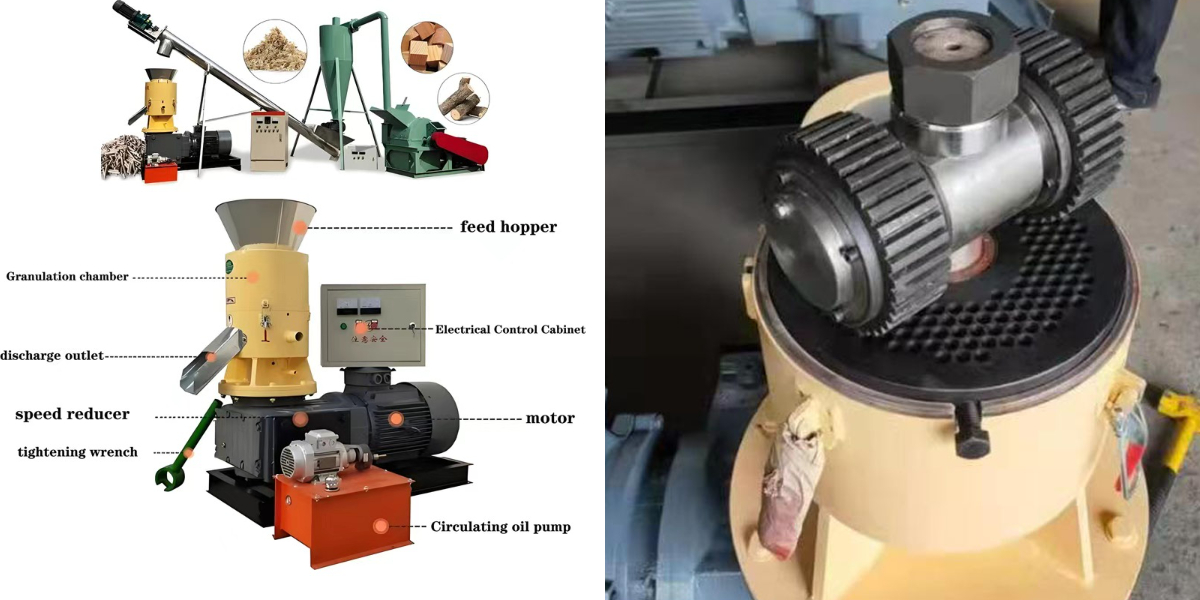
Flat Die Wood Pellet Mill is a molding equipment that uses pressure to extrude crushed biomass raw materials (such as wood chips, straw, etc.) into high-density solid pellet fuel. Its core feature is the use of a horizontally placed circular or disc-shaped mold (flat mold). Compared with the more complex ring mold pellet machine, the flat mold machine is particularly suitable for small and medium-sized production, farm workshops, and individual households due to its simple structure, low investment cost, and convenient operation and maintenance. It is an ideal equipment for achieving localized utilization of biomass energy.
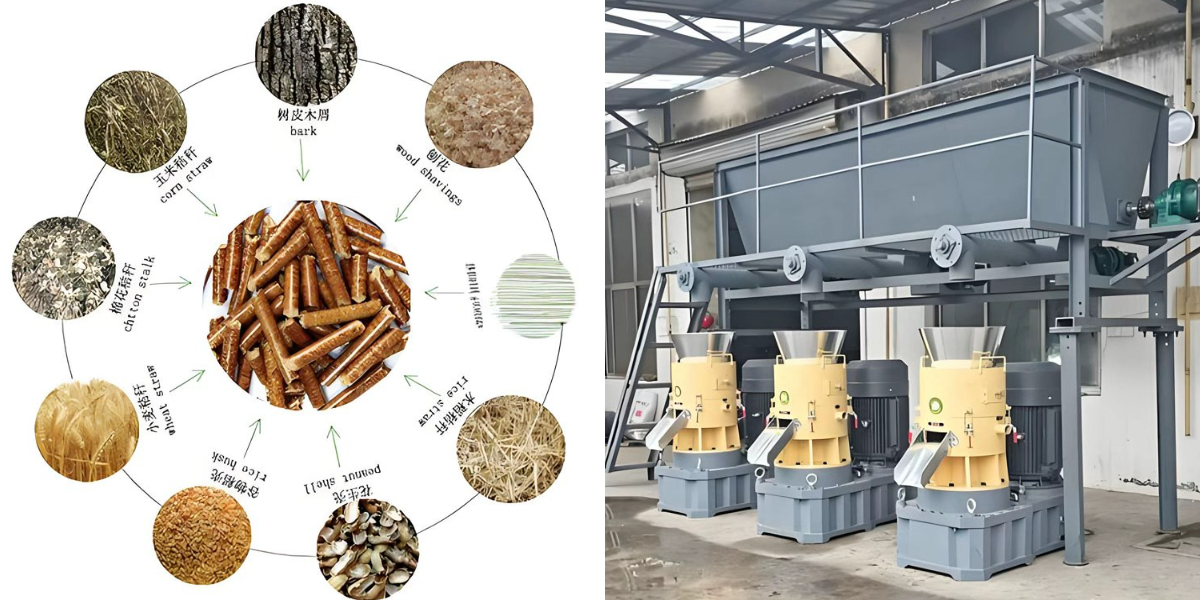 Working Principle
The working principle of the flat die wood pellet machine can be summarized as the extrusion molding process of "static die rotation, pressure wheel rolling", with the specific steps as follows:
1. Feeding: Crushed and humidity adjusted wood chips and other raw materials are evenly fed into the hopper above the main machine by the feeding device.
2. Fabric: The raw materials fall under the high-speed rotating fabric feeder and are evenly scattered on the horizontal mold surface under the action of centrifugal force.
3. Rolling: Two rollers (not revolving, only rotating) installed above the mold start to rotate under the action of material friction. Due to the continuous horizontal rotation of the mold driven by the driving device, when the material passes through the narrow gap between the pressure wheel and the mold, it will be subjected to huge radial pressure from the pressure wheel.
4. Extrusion molding: Under immense pressure, the material is forcefully squeezed into the cylindrical hole on the mold disc. In the mold hole, the material undergoes high temperature and high pressure, and its lignin softens, playing a natural adhesive role.
5. Discharge and cutting: The compressed strip material is extruded from below the mold hole and cut into cylindrical particles of a set length by a cutting blade fixed outside the mold, ultimately completing the granulation process.
 Technical Specifications
Model | Capacity(KG/H) | Power(KW) | Size(mm) | Weight(KG) |
PKJ250型 | 100-200 | 15 | 1120*440*1050 | 400 |
PKJ300型 | 200-300 | 22 | 1280*560*1200 | 760 |
PKJ350型 | 300-400 | 30 | 1300*530*1250 | 850 |
PKJ400型 | 400-500 | 37 | 1400*650*1300 | 950 |
PKJ450型 | 500-700 | 45/55 | 1600*700*1600 | 1700 |
PKJ550型 | 700-1000 | 55/75 | 2000*900*1750 | 2400 |
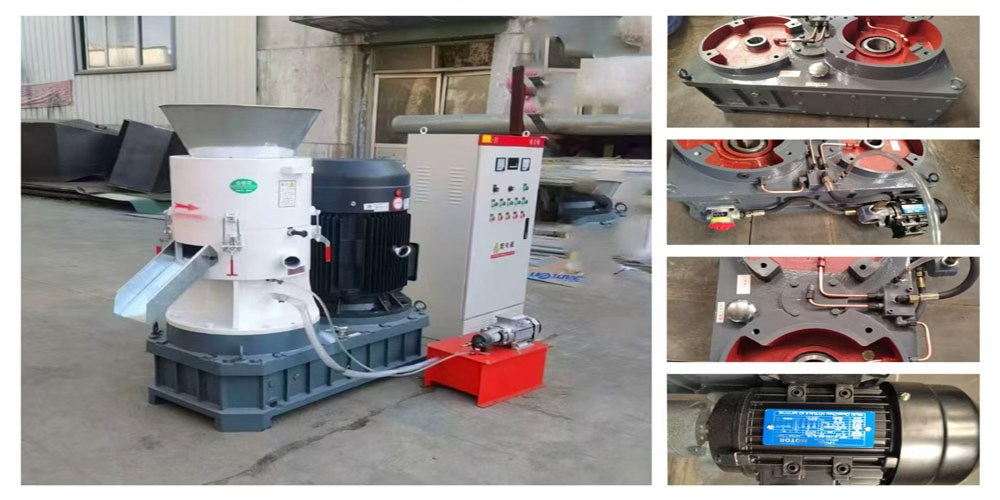
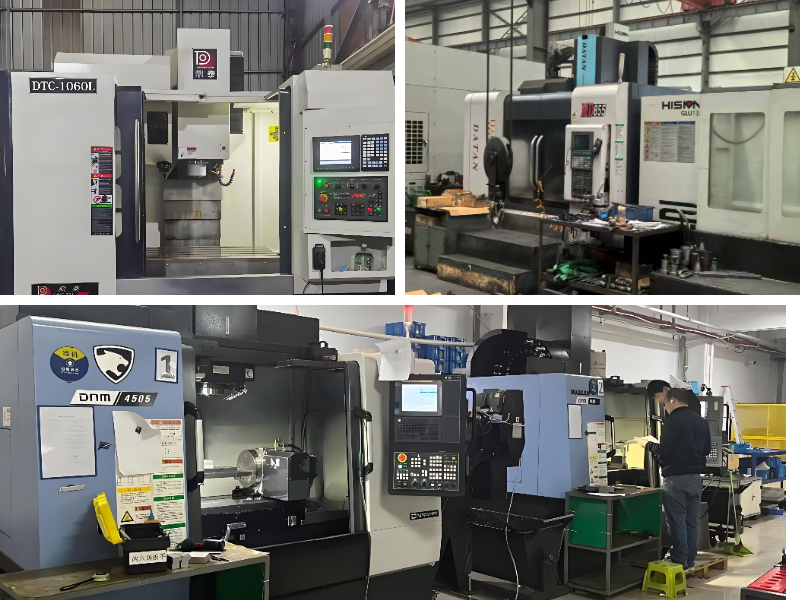
Company Processing Equipment