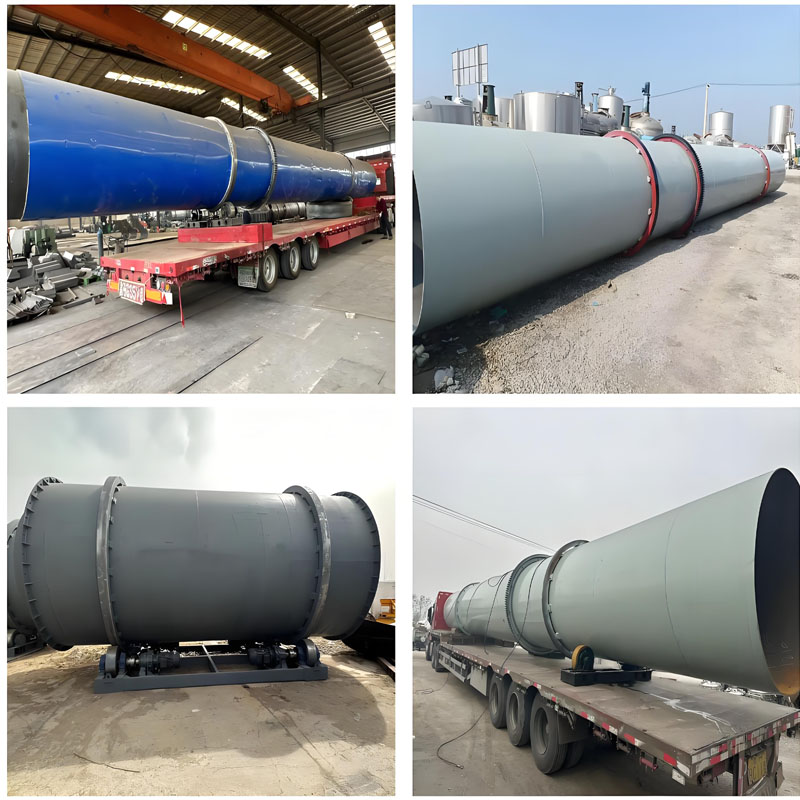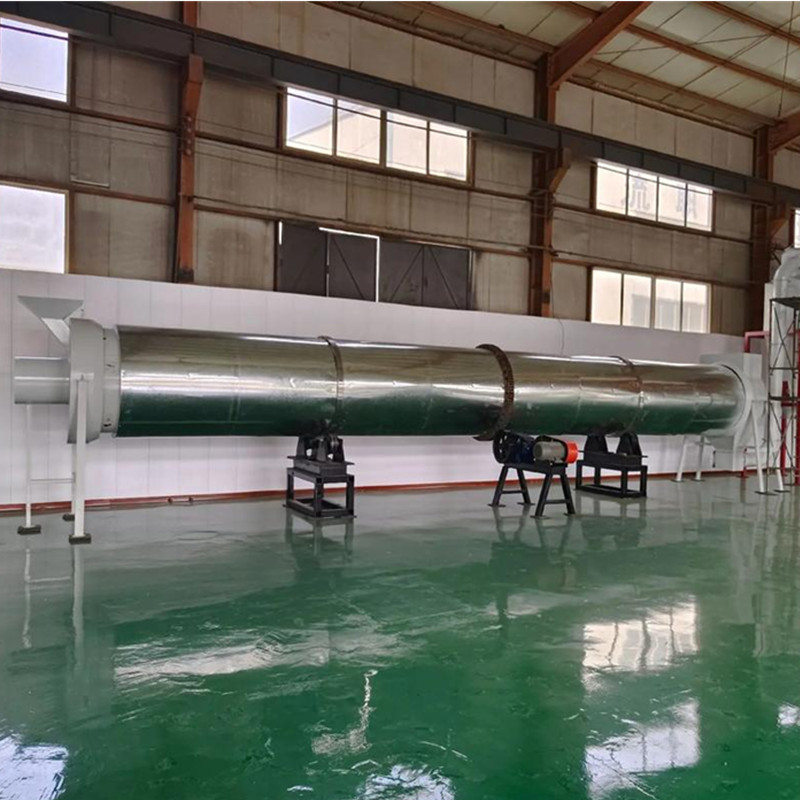
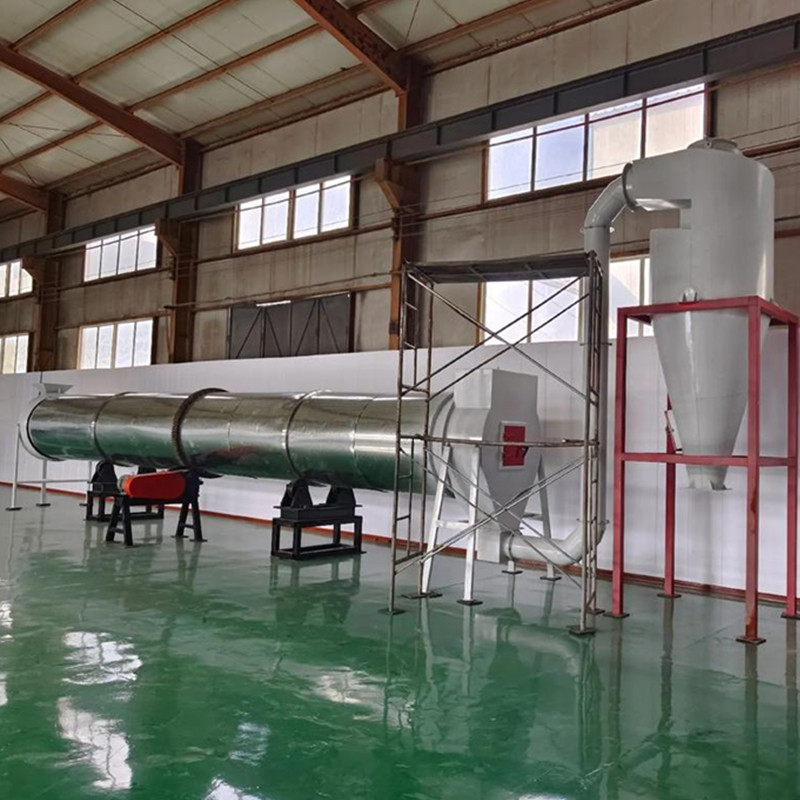
Indirect Rotary Dryer
Large processing capacity, capable of continuous and stable operation
Strong adaptability, capable of handling various forms of materials
Reliable operation and low maintenance cost
Drying evenly, ensuring product quality through material lifting
Core Advantages Of Jurnal Rotary Dryer
1. High processing capacity, continuous operation
This is its most significant advantage. The rotary dryer can operate continuously for 24 hours, making it very suitable for matching with upstream production lines (such as mines, chemical plants, fertilizer plants) to achieve large-scale continuous drying operations. A single device can process materials ranging from a few tons to hundreds of tons per hour, which is unmatched by most other drying equipment.
2. Strong operational flexibility and adaptability
The range of materials that can be dried is very wide, ranging from powders, particles, blocks to sheet materials. It has good adaptability to changes in the moisture content and particle size of materials. By adjusting parameters such as speed, temperature, and filling rate, it is possible to stably dry materials in different states.
3. Stable and reliable operation with low maintenance costs
The structure is sturdy, with a slightly tilted slowly rotating cylinder as the main body, and the mechanical transmission components are relatively simple. Under proper design and maintenance, it can operate stably for a long time with low failure rate and long service life. Due to its universality and technological maturity, maintenance and replacement of parts are relatively convenient and cost-effective.
4. Good drying effect and uniform product quality
The material is repeatedly picked up and scattered by the built-in lifting blades inside the cylinder, forming a uniform material curtain that fully contacts with the hot air. This "lifting and scattering" mechanism ensures that the material is heated evenly and dried uniformly, effectively avoiding problems of local over drying or insufficient drying.
5. High temperature and high pressure resistance, wide applicability
According to the characteristics of the dried material, the drying medium in contact with it can be flexibly selected, such as hot air, flue gas, steam, etc. Capable of withstanding high intake temperatures (up to 1000 ° C or above), especially suitable for materials that require high temperature and rapid drying.
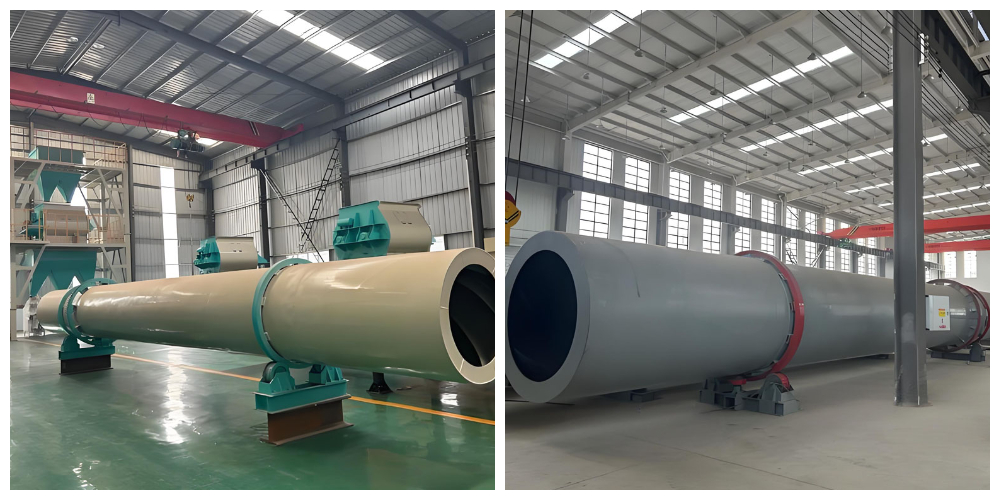 Application scenarios
Minerals and Metallurgy: Dry sand, mineral powder, clay, metal concentrates, etc.
Chemical industry: dry fertilizers (such as ammonium phosphate, urea), calcium carbonate, polymers, inorganic salts, etc.
Building materials industry: drying and calcination of cement raw materials/clinker, slag, fly ash, etc.
Environmental protection field: dry sludge, biomass waste, etc.