Small Pellet Mill Machine
Enhancing feed utilization and digestibility: Through high-temperature and high-pressure pressing, starch is gelatinized and some harmful bacteria are killed. The resulting pellet feed is easier for livestock and poultry to digest and absorb, effectively improving feed conversion efficiency.
Avoid picky eating and reduce waste: By compressing powdered feed into evenly distributed granules, we can effectively prevent animals from being picky and reduce feed waste by approximately 10%-15%.
More convenient storage and transportation: Pellet feed has high density and small volume, making it easy to store and transport over long distances. At the same time, due to its low moisture content, it is less prone to mold growth, extending its shelf life.
Low investment and flexible operation: The equipment is inexpensive, has low energy consumption, and requires minimal space. With its simple structure, it is easy to operate and maintain, making it highly suitable for small-scale production and significantly reducing breeding costs.
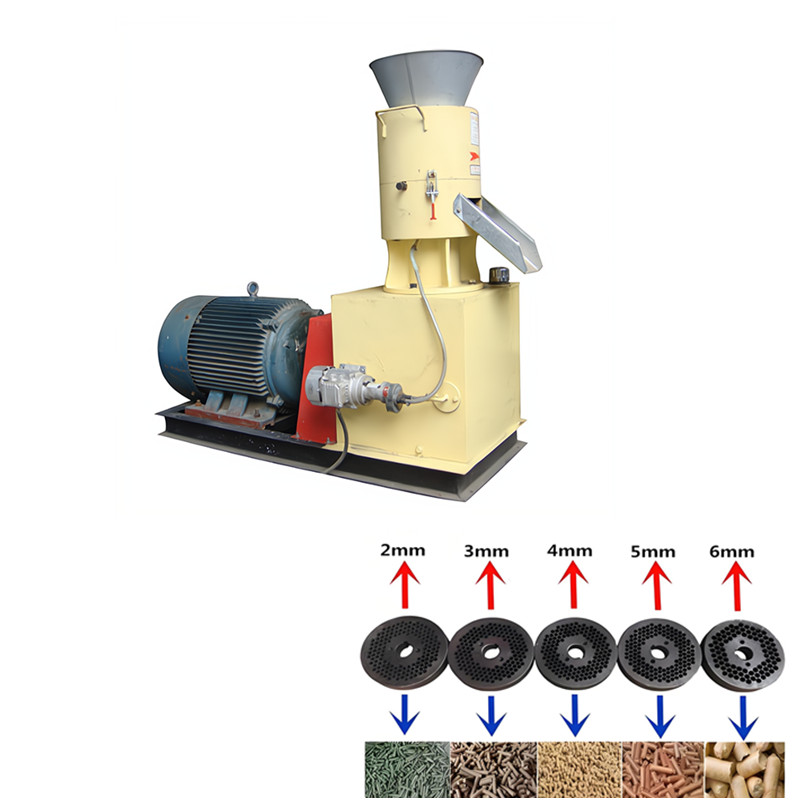
Versatile and adaptable: By changing molds with different pore sizes, it can produce particles of varying diameters, meeting the feeding needs of various livestock and poultry such as chickens, ducks, fish, pigs, and cattle.
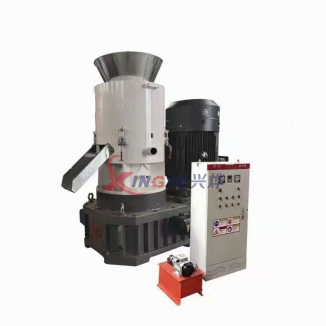
A Small Pellet Mill Machine, also commonly known as a household feed pellet mill, is a mechanical device that utilizes physical extrusion to compress powdered feed ingredients (such as corn, soybean meal, straw chips, etc.) into high-density, regular cylindrical pellets. Its core operating principle is circular motion: upon startup, the main shaft drives the press roller to rotate, forcibly extruding the raw materials located on the flat die (a perforated disc) through the die holes. During this process, the material experiences intense friction with the press roller and the flat die, leading to a temperature increase (up to 70-75°C). This high temperature causes a certain degree of gelatinization (cooking) of the starch in the feed and kills some harmful microorganisms, thereby enhancing feed quality.
 Main features
Compact design and low investment threshold: The machine structure is relatively simple, with a compact overall size and small footprint. The purchase cost and installation cost are usually lower than those of large industrial models, and some models can even be directly powered by 220V household lighting electricity, making them very suitable for initial investment by individuals or small-scale farmers.
Flexible operation and strong adaptability: By replacing molds with different pore sizes, particles of various diameters (commonly ranging from 2.5mm to 8mm) can be easily produced, flexibly adapting to the needs of various livestock and poultry such as chickens, ducks, rabbits, and fish. The adaptability to raw materials is also relatively wide, and in addition to concentrated feed, it can also process some coarse fiber materials such as straw and grass powder.
Improving feed quality and utilization rate: The granular feed produced has high hardness and a smooth surface, which can effectively prevent animals from being picky and reduce feed waste (about 10%-15%). The curing effect during processing can produce a strong aroma, improve palatability, and facilitate the digestion and absorption of nutrients.
Convenient for storage and energy-saving and environmentally friendly: The pellet feed has a high density and small volume, making it less prone to moisture absorption and mold growth, which is more conducive to storage and transportation. The machine adopts the "dry in, dry out" process, usually requiring little or no water addition, resulting in a low moisture content in the finished product, which is conducive to long-term preservation.
Durable core components: The core wearing parts of the machine, namely the flat mold and the pressure roller, are usually made of high-quality alloy steel and undergo special heat treatment, making them relatively wear-resistant and having a long service life.

Technical parameters
Model | Power(kw) | Pellet diameter(mm) | Capacity(kg/h) |
SKJ120 | 3kw | Φ2-Φ6 | 70-100 |
SKJ150 | 4kw | Φ2-Φ6 | 100-150 |
SKJ200 | 11kw | Φ2-Φ6 | 200-400 |
SKJ250 | 15kw | Φ2-Φ6 | 400-600 |
SKJ300 | 22kw | Φ2-Φ8 | 600-800 |
SKJ350 | 30kw | Φ3-Φ8 | 800-1000 |
SKJ400 | 30/37kw | Φ3-Φ8 | 1000-1200 |
SKJ450 | 45/55kw | Φ4-Φ8 | 1500-2000 |
SKJ550 | 55kw | Φ4-Φ8 | 2000-3000 |