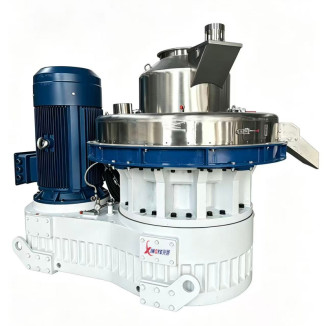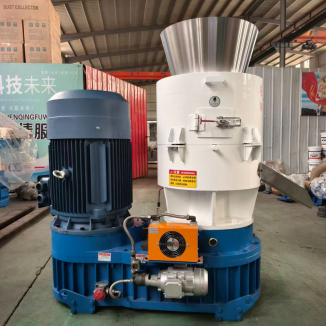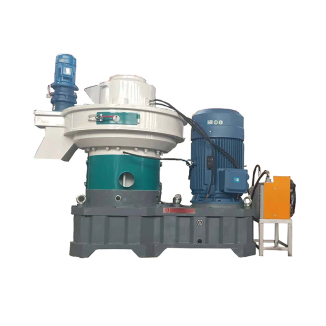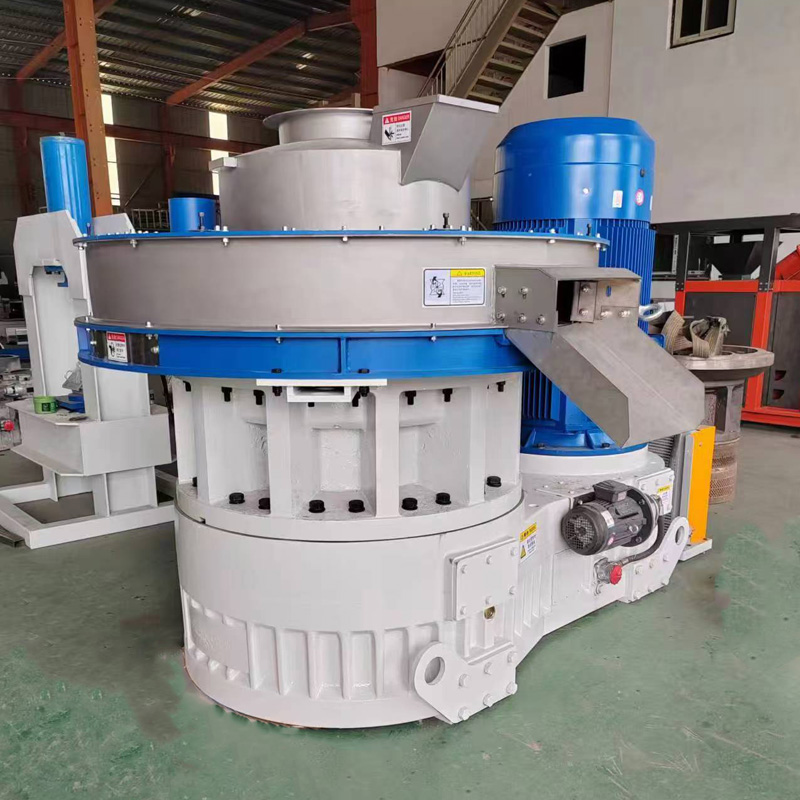
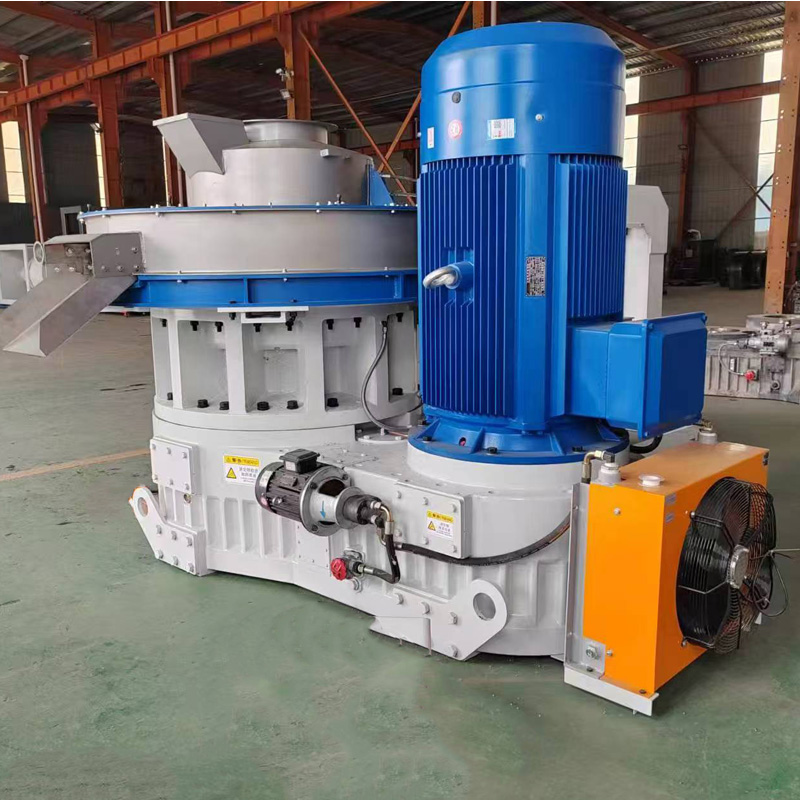
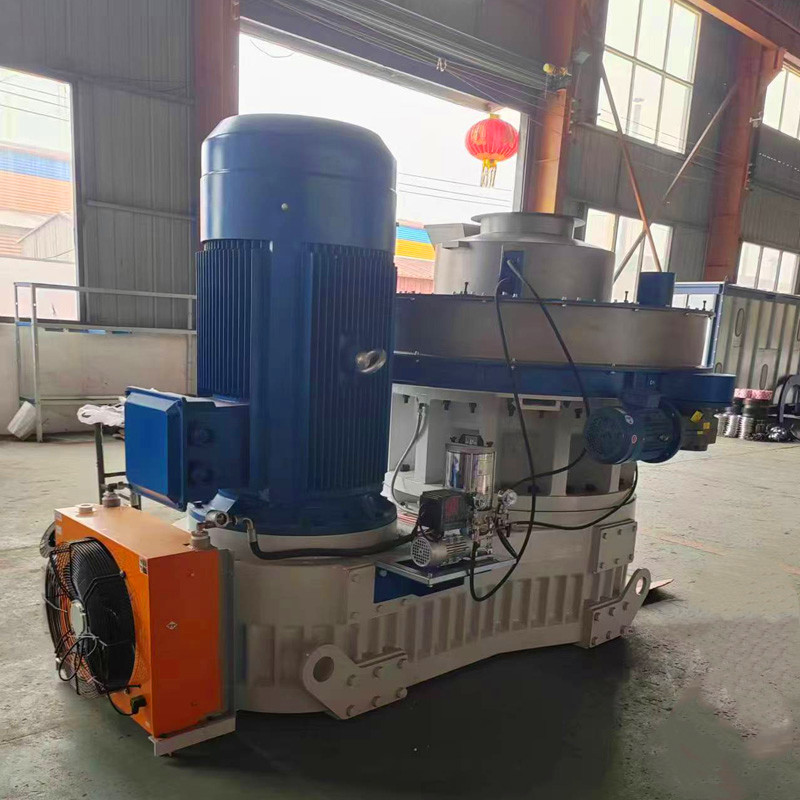
Pellet Mill For Sawdust
Turning waste into treasure and increasing resource value: converting agricultural and forestry waste (such as sawdust and straw) into high-density, high combustion value clean energy, achieving efficient resource utilization.
Green and environmentally friendly, reducing emissions and carbon emissions: The pollutants and carbon emissions after combustion are much lower than traditional fuels such as coal, which meets the requirements of sustainable development.
Efficient and energy-saving, with sufficient combustion: The produced pellet fuel has a high calorific value, far exceeding the combustion efficiency of raw materials, and is easy to store and transport, significantly reducing energy costs.
Widely applicable and adaptable: The product can be used in multiple fields such as heating, industrial boilers, biomass power generation, etc., with a wide range of raw material sources and significant economic value.
The Core Feature Of Pellet Mill For Sawdust (also known as biomass pellet machine) is its efficient conversion and resource integration ability:
1. Strong adaptability of raw materials: It can not only handle sawdust, but also be compatible with various agricultural and forestry wastes such as straw, rice husk, sawdust, etc. It has a wide tolerance range for the particle size and humidity of raw materials.
2. High molding density: Through high-pressure extrusion, the produced granular fuel has a tight structure, high density, high calorific value, and is easy to transport and store over long distances.
3. High degree of automation: Modern pellet machines are usually equipped with automatic feeding, lubrication, and intelligent control systems, which can achieve continuous and stable production and reduce manual labor intensity.
4. Win win situation for environmental protection and economy: converting waste into clean energy reduces pollution caused by incineration, while creating considerable economic benefits, achieving the goal of "turning waste into treasure".
Working principle
The sawdust pellet machine mainly adopts the working principle of die roll extrusion, and its core process can be summarized as "forced extrusion":
1. Pre treatment and feeding: The raw materials are first crushed and screened (to ensure uniform particle size), and the moisture is controlled within the ideal range of 12% -18% through drying. Subsequently, the processed raw materials are uniformly and continuously fed into the granulation chamber by a spiral feeder.
2. Extrusion molding: This is the most crucial step. In the granulation chamber, there is a circular mold (press mold) with multiple rows of uniform small holes and 2-3 freely rotatable press rollers. The motor drives the mold or pressure roller to rotate at high speed through the gearbox. Under the action of huge centrifugal force, the raw material is carried into the narrow gap between the pressure roller and the mold. The pressure roller exerts huge radial pressure on the raw material, forcibly squeezing it into the mold hole.
3. Cutting and discharging: When raw materials pass through narrow mold holes, they undergo extremely high pressure and temperature, causing their lignin to soften and act as a natural adhesive. After being extruded from the mold hole, a tight cylindrical strip is formed, which is cut into particles of a set length by an external cutter and then discharged.

Performance
The performance of the pellet machine directly determines production efficiency and product quality, and the main measurement indicators include:
1. Production capacity (output): usually calculated in tons per hour, it is the core indicator for measuring production efficiency. Depending on the model, it ranges from several hundred kilograms per hour to several tons.

2. Molding rate and durability: Refers to the integrity and crush resistance of finished particles. The particles produced by high-performance pellet machines have smooth surfaces and dense structures, with a molding rate of over 95%, and are not easily crushed into powder during transportation.
3. Energy consumption ratio: refers to the amount of electricity consumed per unit weight of particles produced. This is an important indicator for measuring the economic efficiency of equipment. High performance equipment can effectively control energy consumption and reduce production costs while ensuring output.
4. Durability of key components: Molds and rollers are vulnerable parts, and their service life (usually measured in production tons) is the key to the stability of equipment performance. Components made of high-quality alloy steel and treated with special processes have stronger wear resistance, which can effectively extend replacement cycles and reduce maintenance costs.