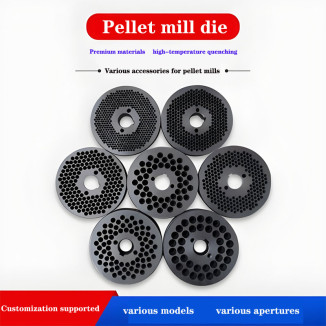
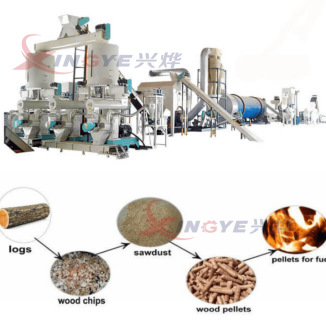
2026 Global Biomass Pellet Machine Market: Rising Demand Driven by Renewable Energy Transition
As global countries accelerate carbon‑neutrality goals, the biomass pellet machine industry is witnessing steady market expansion in 2026. Rising demand for clean bio‑energy, agricultural waste recycling and industrial waste‑to‑energy projects are pushing the global market forward. Both large‑scale industrial plants and small‑to‑medium‑size production workshops are actively investing in ring die pellet mill and complete biomass pellet production line solutions to convert sawdust, straw, rice husk and other agricultural residues into high‑quality fuel pellets.

Global Market Overview
The global biomass pellet machine market is projected to reach USD 5.21 billion in 2026, with a compound annual growth rate of around 8.9% from 2023‑2030. Asia‑Pacific region holds the largest market share, accounting for 42.7% of global demand, followed by Europe and North America.
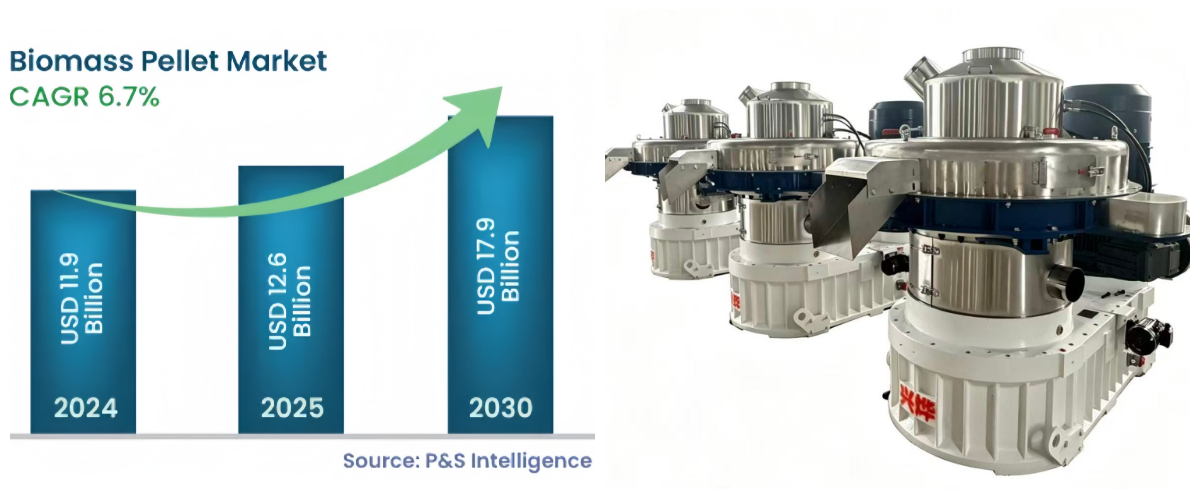
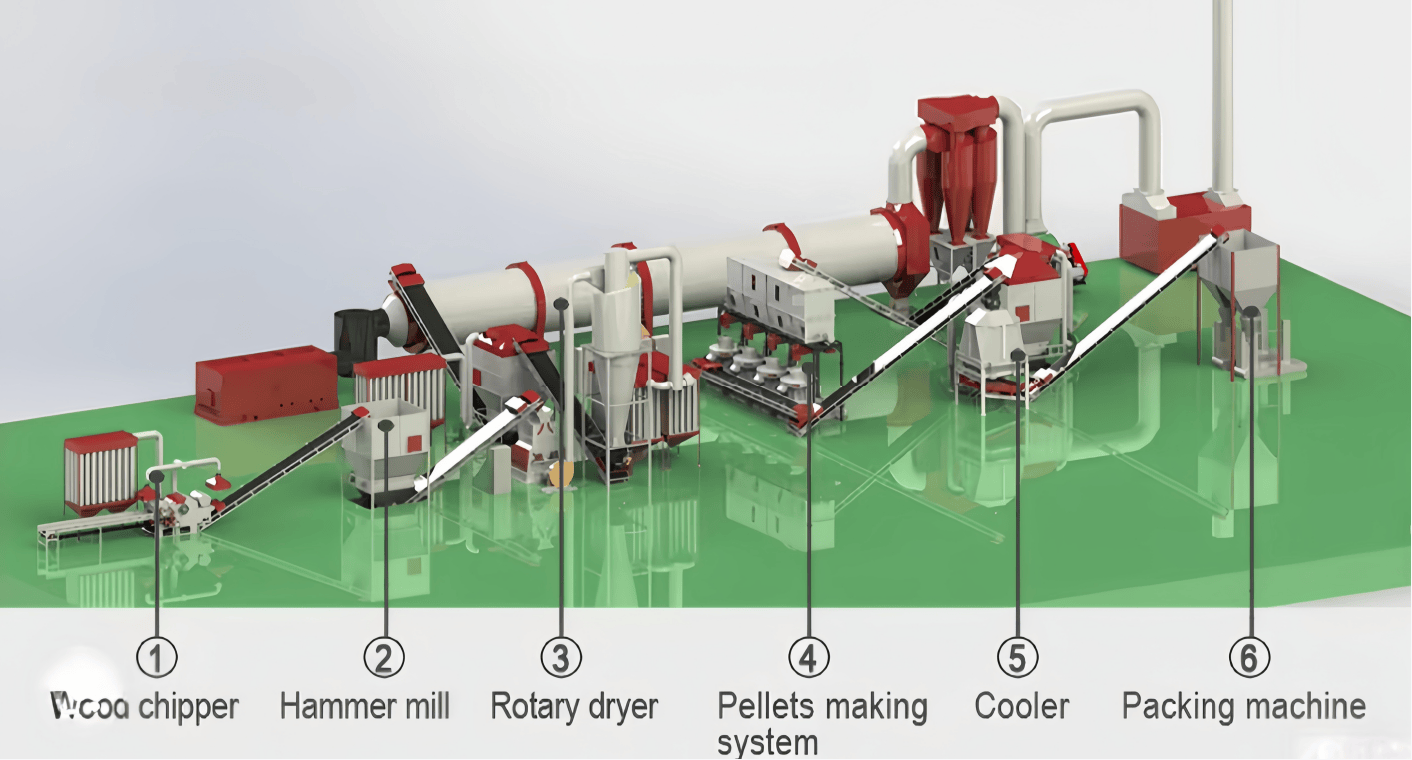
The mainstream equipment on market is ring die pellet mill, which is widely adopted for continuous industrial production. It can handle multiple raw materials and deliver stable pellet output. For clients seeking turnkey solutions, a full‑set biomass pellet production line is the preferred choice, integrating crushing, drying, pelletizing, cooling and screening processes.
Key Industry Trends
1. High‑efficiency & energy‑saving design
Modern biomass pellet machine is equipped with frequency‑conversion feeding system and automatic lubrication. It can cut energy consumption by 15‑25% while keeping high output, which greatly reduces long‑term operating cost for end‑users.
2. Multi‑feedstock adaptability
New‑generation ring die pellet mill is optimized to process sawdust, straw, palm husk, cotton stalk and other diversified biomass materials. It solves the problem of unstable pellet quality caused by variable raw material moisture and composition.
3. Modular complete production line
More buyers choose complete biomass pellet production line instead of single machine. Modular design allows easy capacity expansion, which is especially suitable for emerging markets with limited construction conditions.
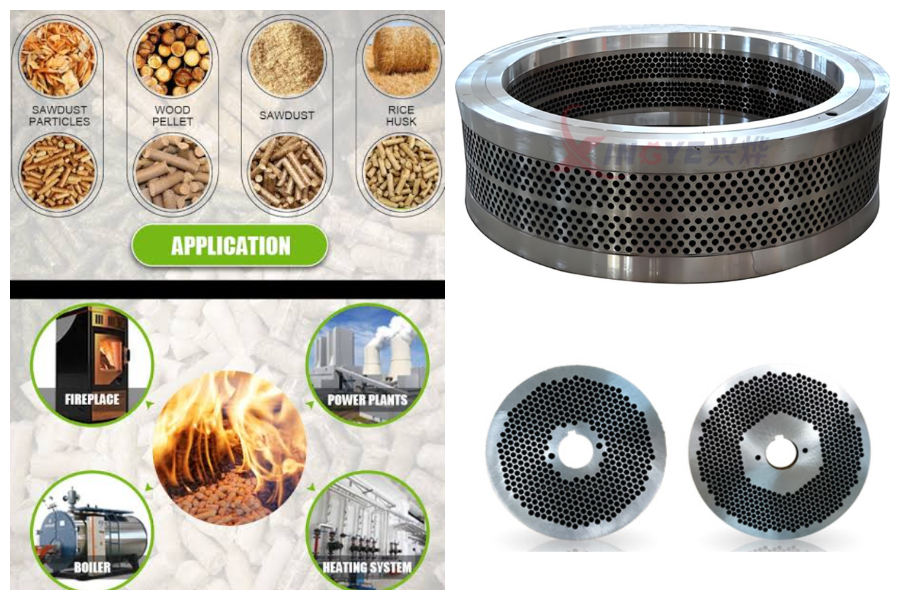
In 2026, the global biomass pellet machine market is full of opportunities. As renewable energy policies continue to push forward, demand for high‑quality ring die pellet mill and stable‑performance biomass pellet production line will keep rising. Manufacturers who focus on energy‑saving, multi‑material adaptability and complete after‑sales support will gain more market share in global competition.
 FAQ
FAQ
Q1: What raw materials can a biomass pellet machine process?
A: It can process sawdust, wood chips, straw, rice husk, palm waste, cotton stalk and other agricultural and forestry residues.
Q2: What is the difference between flat die and ring die pellet mill?
A: Ring die pellet mill is for large‑scale continuous industrial production with higher output and longer service life; flat die machine is more suitable for small‑scale household or trial production.
Q3: How to select a suitable biomass pellet production line for my factory?
A: You need to confirm your raw material type, required hourly capacity, local power supply condition and site space. Professional manufacturers can provide customized turnkey solutions.