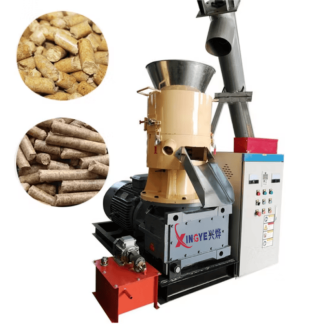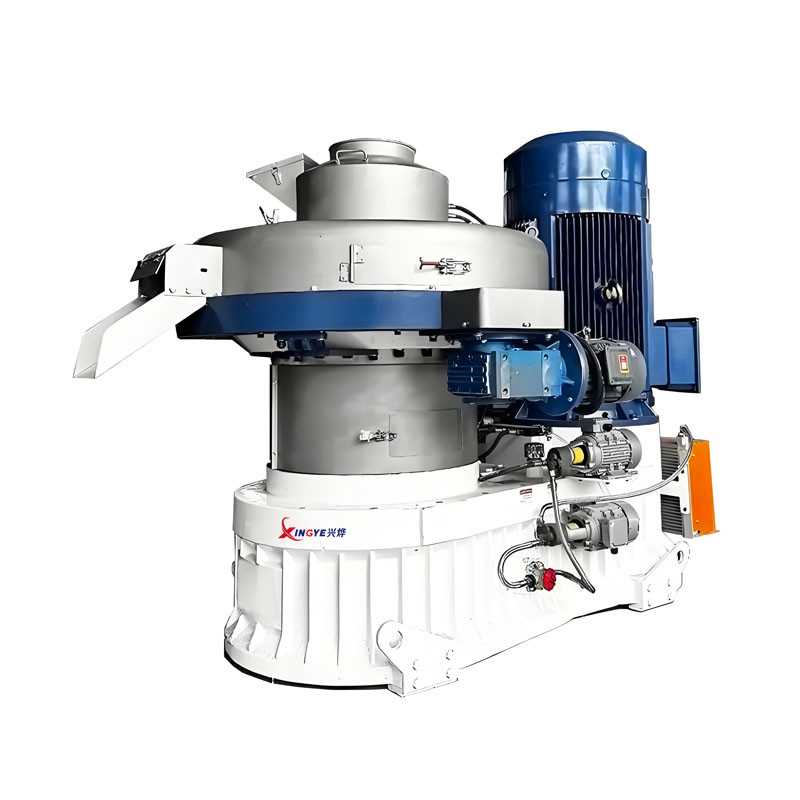
Grass Pellet Mill
Improving feed quality: Through high-temperature and high-pressure granulation, the grass is matured, releasing its fragrance, improving palatability, and achieving a feeding rate of nearly 100%. At the same time, it can kill bacteria and parasites, and improve the digestion and absorption rate of livestock.
Easy to store and transport: The volume of processed pellet feed is significantly reduced, making it easy to store and transport. It is also fire-resistant and mold resistant, and can be stored for 1-2 years under good conditions.
Reduce breeding costs: Granular feed can reduce the amount of concentrated feed used, facilitate control of feeding volume, save feed, reduce storage and management costs, and overall investment in breeding.
Strong adaptability to raw materials: The machine is adaptable to a variety of materials, with broad requirements for moisture content and pulverization degree. Some models can achieve multiple uses in one machine, and can compress various particles such as feed and fuel.
The Grass Pellet Mill machine, professionally known as the "grass pellet forming machine", is a mechanical equipment specifically used to produce high-density, regularly shaped (usually cylindrical) pellet feed from various types of grass (such as alfalfa, ryegrass), crop straw (such as corn stalks, wheat straw), and other silage or hay feed materials through physical pressure.
 Working principle and process
1. Raw material pretreatment: Firstly, the harvested grass or straw needs to be air dried or dried to control its moisture content within the appropriate range for granulation (usually 15% -18%). Subsequently, the raw materials are chopped or crushed to a certain fineness using equipment such as grass cutters and crushers, in order to increase the specific surface area of the materials and facilitate subsequent mixing and pressing.
2. Mixing and conditioning: The crushed raw materials can be formulated and mixed according to nutritional needs, and necessary nutritional additives, vitamins, etc. can be added. Subsequently, the material is sent to the conditioner, where steam or water is introduced for softening, improving the plasticity and adhesion of the material, while also playing a preliminary role in curing and disinfection.
3. Compression molding: This is the most crucial step. The quenched and tempered material is sent between the pressure mold and the pressure roller in the granulation chamber. Under strong mechanical pressure, the material is forcibly extruded from the small holes of the mold, forming dense particles. This process generates high temperatures (up to 70-90 ℃) due to high-pressure friction, further promoting material maturation.
4. Cutting and cooling: The elongated particles extruded from the mold hole are cut into a set uniform length by a cutting blade installed outdoors. Subsequently, the high-temperature and high humidity particles are sent to the cooler, where they are rapidly cooled and dehydrated through air convection, hardening and shaping them for subsequent storage and transportation.
 Core Features
1. Wide adaptability of raw materials, turning waste into treasure:
Machines can process a variety of fiber based agricultural waste, from high-quality grass to various types of straw, all of which can be used as raw materials. This greatly expands the sources of feed, transforming resources that could have been discarded or incinerated into high-value feed, achieving a circular economy in agriculture.
2. Improve the overall quality of feed:
Improving palatability and digestibility: The high temperature and high pressure during the granulation process cause starch gelatinization and protein denaturation, resulting in a strong burnt aroma, significantly improving palatability and increasing feed intake. At the same time, the fiber structure is disrupted, which is more conducive to the decomposition of rumen microorganisms in ruminants and improves digestion and absorption rates.
Sterilization and insecticidal safety: High temperature can effectively kill pathogenic bacteria, insect eggs, and weed seeds carried in raw materials, greatly reducing the risk of animal diseases and potential biological safety hazards in feed.
3. Ultimate storage and economic advantages:
Significant reduction in volume: The volume of granular products can be reduced to 1/8 or even more compared to the original loose material, greatly saving storage space.
Reduce logistics costs: With high density and good fluidity, it is convenient for mechanized loading and unloading as well as long-distance transportation, resulting in a significant reduction in transportation costs per unit weight.
Long term safe storage: The moisture content of granular materials is low, and their microbial activity is inhibited after high-temperature treatment. They have the characteristics of mold prevention, fire prevention, and moisture resistance, and can be safely stored for 1-3 years in a dry environment without deterioration.
Reduce feeding waste: The specifications of pellet feed are standardized, making it less likely for animals to pick or throw it during feeding, and reducing feed loss by 5% -10%.
4. Durable and sturdy, scientifically designed:
The core compression components - molds and rollers - are usually made of high-quality alloy steel (such as 20CrMnTi) and undergo special heat treatment processes such as carburizing and quenching. They have extremely high hardness and wear resistance, ensuring the long-term service life and stable grain production of the equipment under continuous high-pressure and harsh working conditions.
 Product Parameters
Model | Power(KW) | Mold Inner Diameter(MM) | capacity(T/h) | Weight(T) |
HKJ450 | 75 | 450 | 0.8-1.0 | 4.3 |
HKJ560 | 90/132 | 548 | 1-2 | 5.2 |
HKJ700 | 160/200 | 700 | 2-3 | 7.1 |
HKJ850 | 250/280 | 850 | 3-5 | 13.5 |

Company equipment