Flat Die Wood Granulator
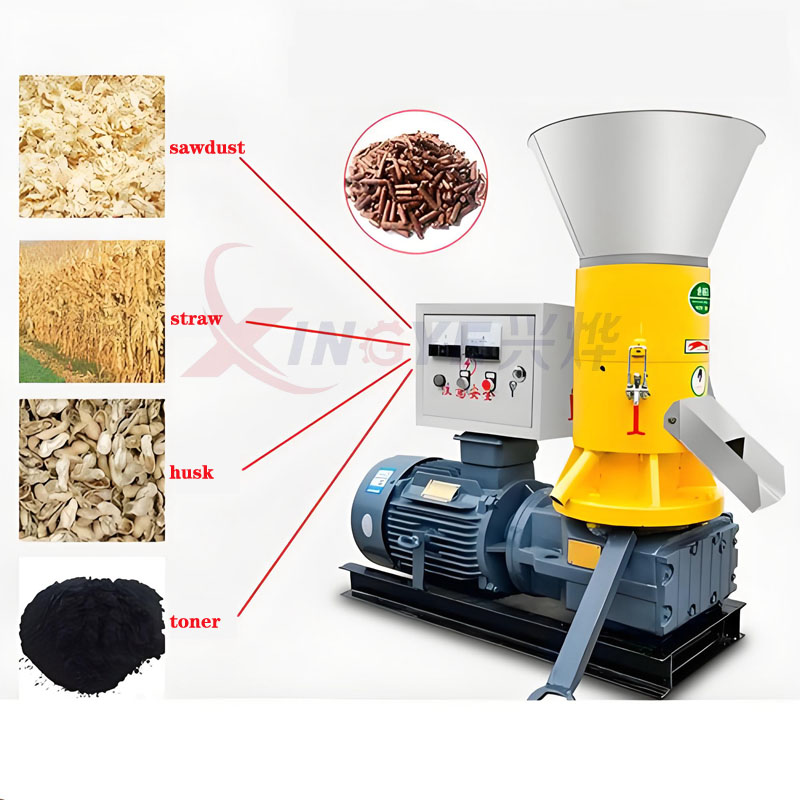
Strong adaptability: Wide requirements for moisture and particle size of coarse fiber raw materials such as sawdust and straw.
Durable and economical: Optimized design of pressure rollers and flat molds, low wear and tear, long service life, and low power consumption and maintenance costs per ton of material.
Multi purpose: By changing the mold, it can produce various particles such as fuel and feed, and has a wide range of applications.
High molding rate: Adopting the principle of vertical preloading, the material is not easily blocked, the particle density is high, and the finished product quality is good.
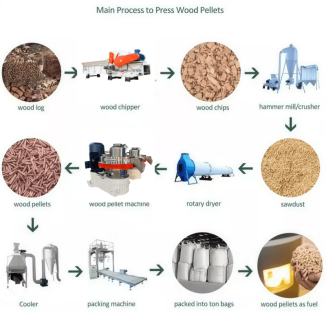
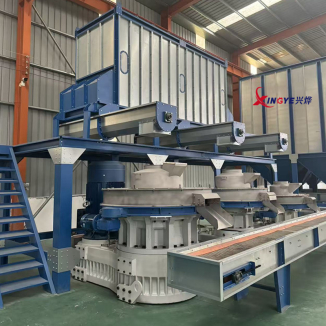
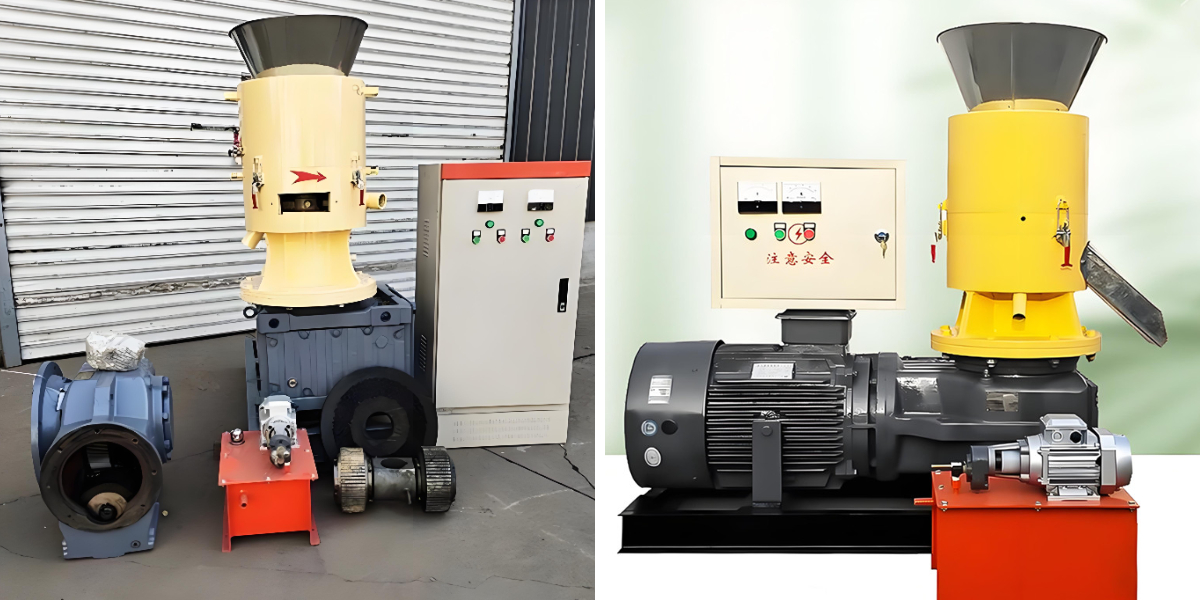
Flat Die Wood Pellet Machine is a molding equipment specifically used to compress biomass materials such as sawdust, sawdust, straw, etc. into high-density pellet fuel. Its core feature is the use of horizontally placed circular molds (flat molds), which have a sturdy structure and are particularly suitable for small and medium-sized production and processing of coarse fiber materials. The biomass pellets produced can be used as a clean energy source, replacing coal, and are widely used in heating, industrial boilers, and other fields.
 Working Principle
1. Feeding and dispersion: The evenly mixed raw materials (such as sawdust) fall into the fabric feeder above the granulation chamber through the feeding port. As the equipment operates, the raw materials are evenly distributed on the horizontally placed mold plate.
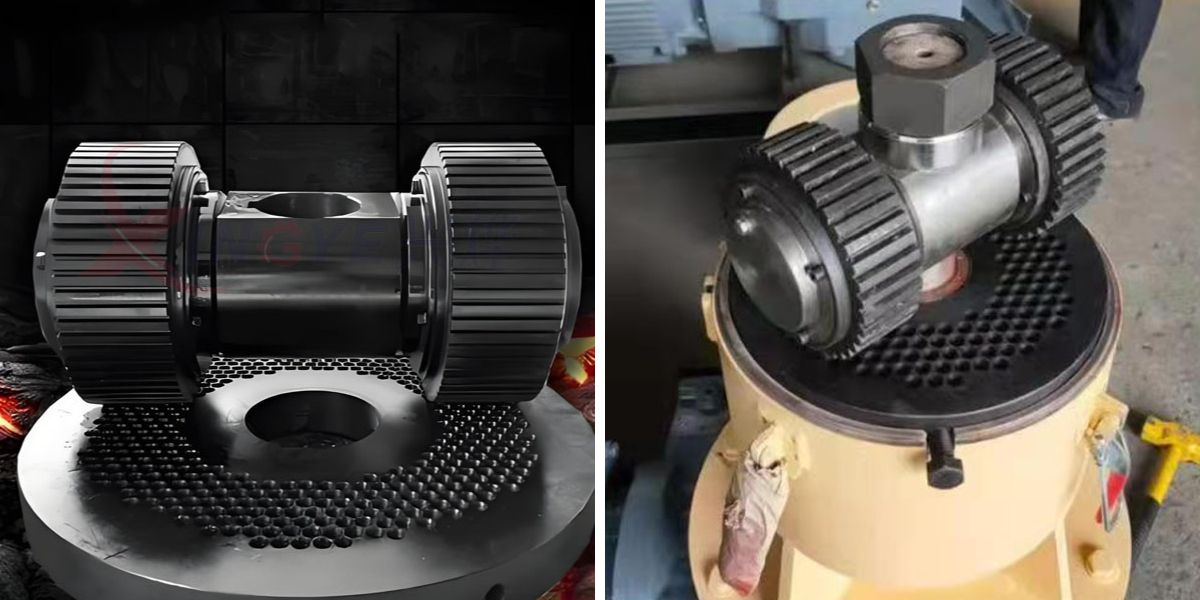
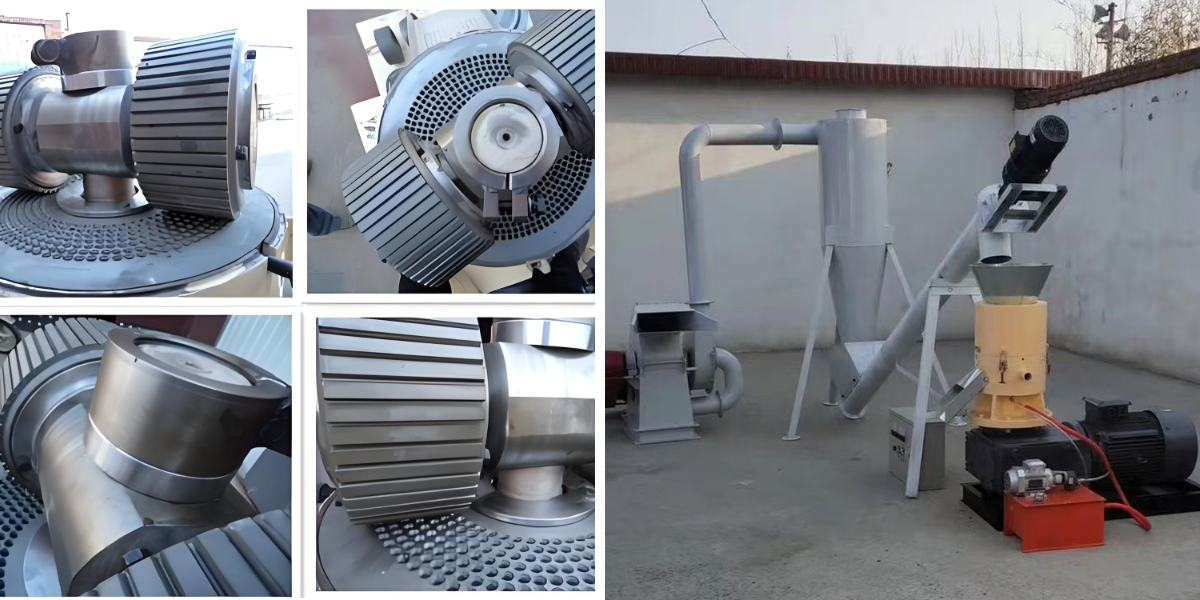
2. Rolling and squeezing: Two or more pressure rollers are installed above the flat mold. The pressure roller rolls in a circular motion on the flat mold under the drive of the driving device (such as the spindle). During the rolling process, the pressure roller forcefully presses the raw materials on the platform into the mold holes of the flat mold.
3. Molding and discharging: The raw materials are compressed and molded in the mold hole under enormous vertical pressure, forming dense cylindrical strips. When the strip extends from the bottom of the mold, it is cut by the cutting blade installed below the mold to form a granular product of a specified length, and then discharged from the machine.
 Core Features
1. Structural advantages
Durable and sturdy: With a vertical structure and direct transmission system, it has strong load-bearing capacity and is particularly suitable for pressing hard and coarse fiber materials such as sawdust.
Easy maintenance: The granulation room is spacious and usually equipped with observation doors and inspection ports, making it easy to replace pressure rollers and molds, and the maintenance cost is low.
2. Performance advantages
Strong adaptability: The requirements for moisture content and particle size of raw materials are relatively relaxed, which can effectively process various biomass materials such as sawdust, rice husks, straw, and even some organic waste.
High molding pressure: The principle of vertical compression enables it to provide a great linear pressure, ensuring high particle density and good molding quality.
3. Cost advantage
Low investment and operating costs: Compared to the ring mold model, the flat mold structure is relatively simple and the initial investment is relatively small. At the same time, its ton production power consumption is usually low, and key vulnerable parts (such as flat molds) can be used on both sides, with a long service life and economical comprehensive use cost.
4. Flexible application
Multi purpose: By replacing flat molds with different apertures and compression ratios, not only can fuel pellets be produced, but also various pellets such as feed and fertilizer can be produced with slight adjustments, with a wide range of applications.
 Technical Specifications
Model | Capacity(KG/H) | Power(KW) | Size(mm) | Weight(KG) |
PKJ250型 | 100-200 | 15 | 1120*440*1050 | 400 |
PKJ300型 | 200-300 | 22 | 1280*560*1200 | 760 |
PKJ350型 | 300-400 | 30 | 1300*530*1250 | 850 |
PKJ400型 | 400-500 | 37 | 1400*650*1300 | 950 |
PKJ450型 | 500-700 | 45/55 | 1600*700*1600 | 1700 |
PKJ550型 | 700-1000 | 55/75 | 2000*900*1750 | 2400 |