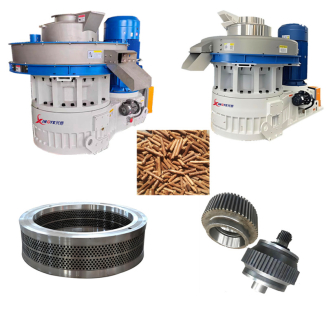
Xingye Environmental Ships Auxiliary Conveyor Equipment for African Customer’s Pellet Production Line
Recently, Shandong Xingye Environmental Protection Technology Co., Ltd. successfully loaded and shipped a batch of auxiliary conveyor equipment for a pellet production line to Africa. The equipment will be used in the customer’s new biomass pellet plant, helping to realize material feeding, conveying, lifting and continuous production.
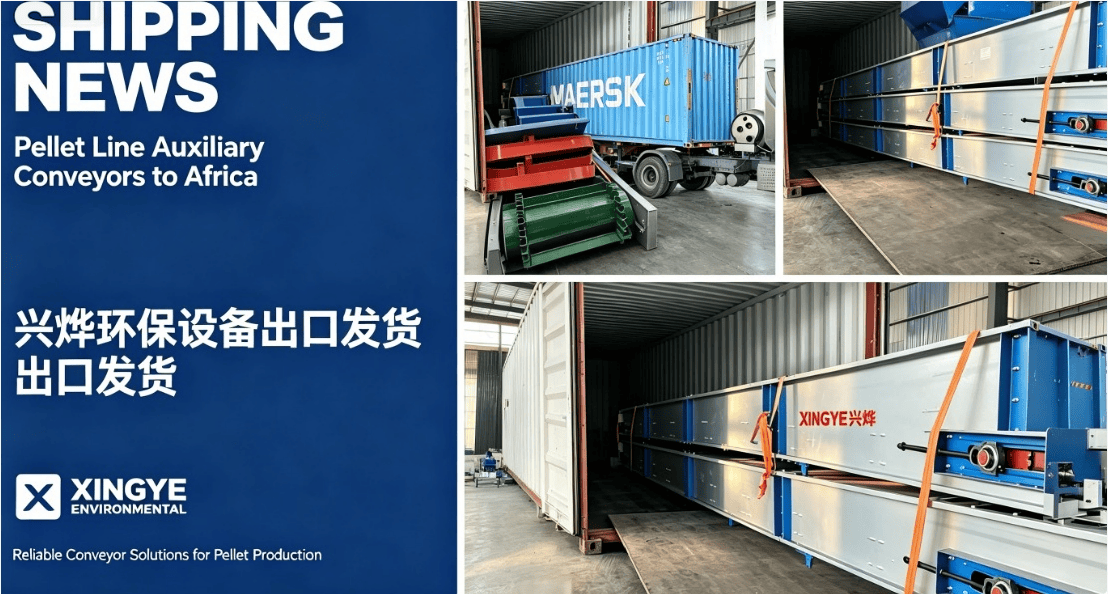
From the shipping photos, the equipment has been properly fixed and loaded according to export packaging requirements. The team checked equipment positioning, strap fastening, container space utilization and loading safety to ensure stability during long-distance sea transport. According to Xingye Environmental, export projects require not only reliable machinery, but also strong capabilities in packaging, container loading, delivery schedule and on-site service.
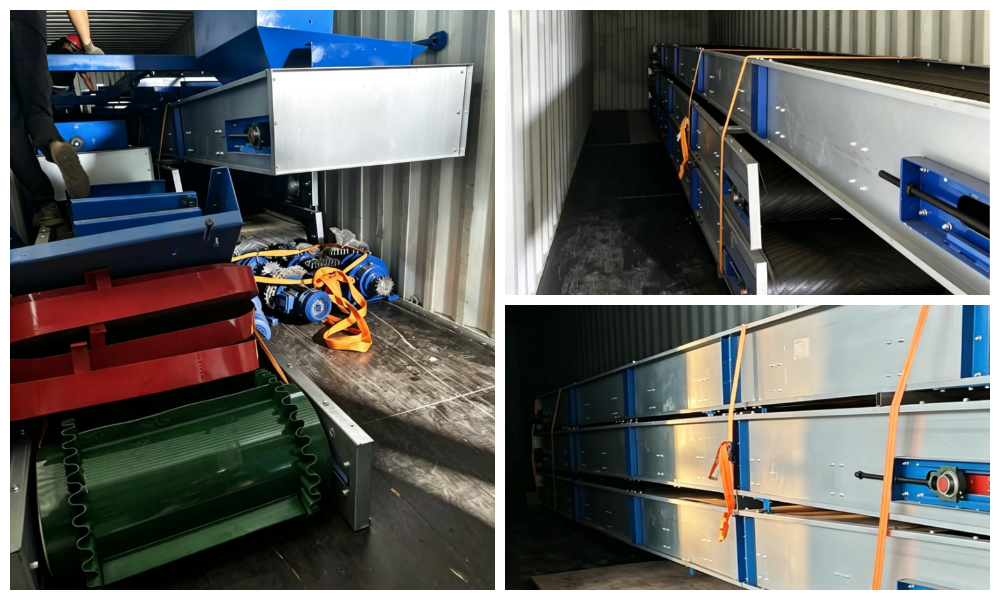
The conveyor equipment provided by Xingye Environmental features compact structure, stable operation, easy installation and low maintenance cost. It is widely suitable for biomass pellets, wood pellets, straw pellets, feed pellets and industrial powder conveying. After the project is put into operation, it is expected to further improve the local efficiency of biomass energy utilization.
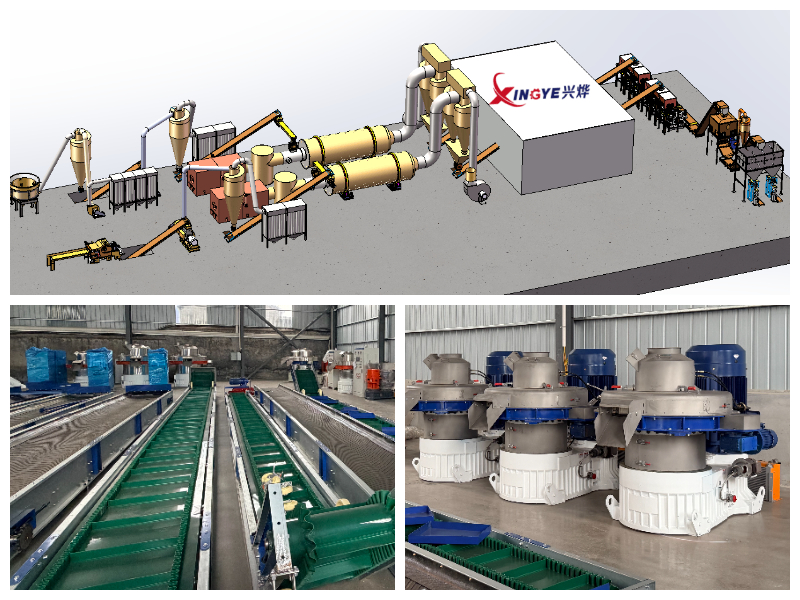
In international markets, many customers ask: what equipment is included in auxiliary conveyor equipment for a pellet production line? In fact, a complete auxiliary conveying system is not just one belt conveyor, but a customized conveying solution based on the customer’s process flow. Common equipment includes horizontal belt conveyors, inclined belt conveyors, scraper conveyors, screw conveyors, bucket elevators, vibrating feeders and transition chutes.
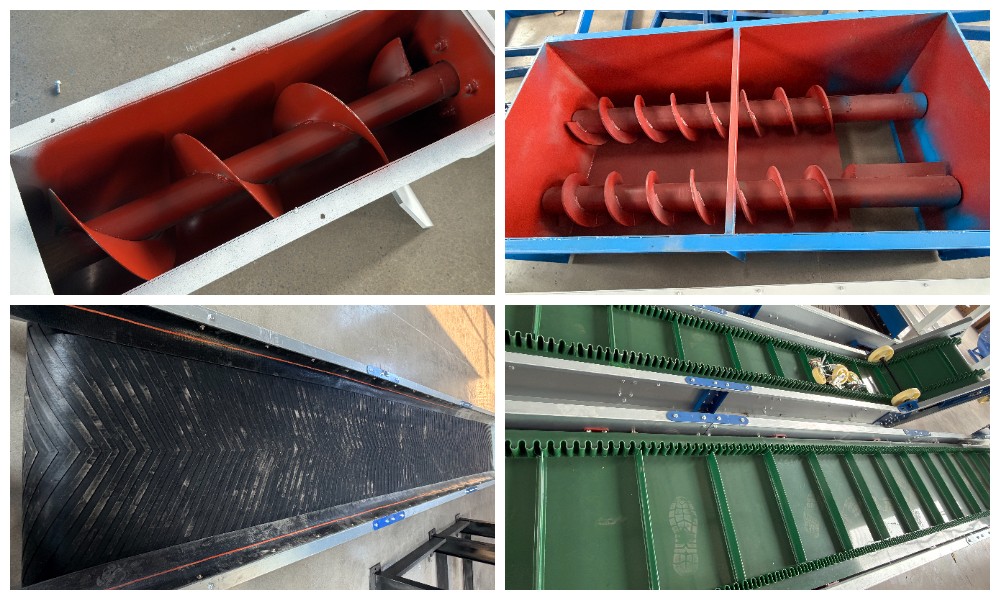
For African customers, projects usually require a balance between cost, efficiency, durability and after-sales service. The equipment delivered by Xingye Environmental this time was designed according to the customer’s actual production capacity, raw material type, workshop layout and budget. The company aims to provide reliable Chinese equipment support for African biomass energy projects through a combination of standardized products and customized solutions.
 The shipment marks further cooperation between Xingye Environmental and African customers in the field of biomass pellet equipment. In the future, the company will continue to focus on auxiliary conveyor equipment for pellet production lines, biomass pellet plant conveyor systems and pellet production line material handling equipment, providing international customers with more stable, efficient and customized material conveying solutions.
 FAQ
FAQ
What equipment is included in auxiliary conveyor equipment for a pellet production line?
It mainly includes belt conveyors, inclined conveyors, screw conveyors, scraper conveyors, bucket elevators, vibrating feeders and transition chutes. The specific configuration is determined according to the customer’s process layout, raw material type and production capacity requirements.
What is the role of conveyor equipment in a pellet production line?
Conveyor equipment is mainly responsible for continuous material conveying, lifting, feeding and transfer. It connects crushing, drying, pelleting, cooling, screening and finished product storage. A stable conveyor system can reduce manual intervention, improve production efficiency and lower the risk of material blockage.
What should African customers pay attention to when choosing conveyor equipment for a pellet production line?
It is recommended to focus on equipment durability, motor stability, ease of maintenance, transportation dimensions, installation conditions, spare parts supply and after-sales service. African projects often face challenges such as high temperature, dust, long-distance transportation and limited on-site maintenance conditions. Therefore, equipment with a practical structure and easy maintenance is more conducive to long-term operation.
Can Xingye Environmental provide customized conveyor equipment?
Yes. Xingye Environmental can provide customized conveyor equipment solutions according to the customer’s site layout, material characteristics, production capacity requirements and budget, including non-standard dimensions, special structures, anti-corrosion treatment, dust-proof design and supporting control systems.
How is this equipment packed for export?
It is usually shipped in containers. Equipment is protected with stretch film, corner protectors, wooden supports, straps and fixing structures. During loading, the team focuses on equipment fastening, space utilization, moisture protection and transportation safety to ensure that the equipment remains in good condition upon arrival at the destination port.